 By admin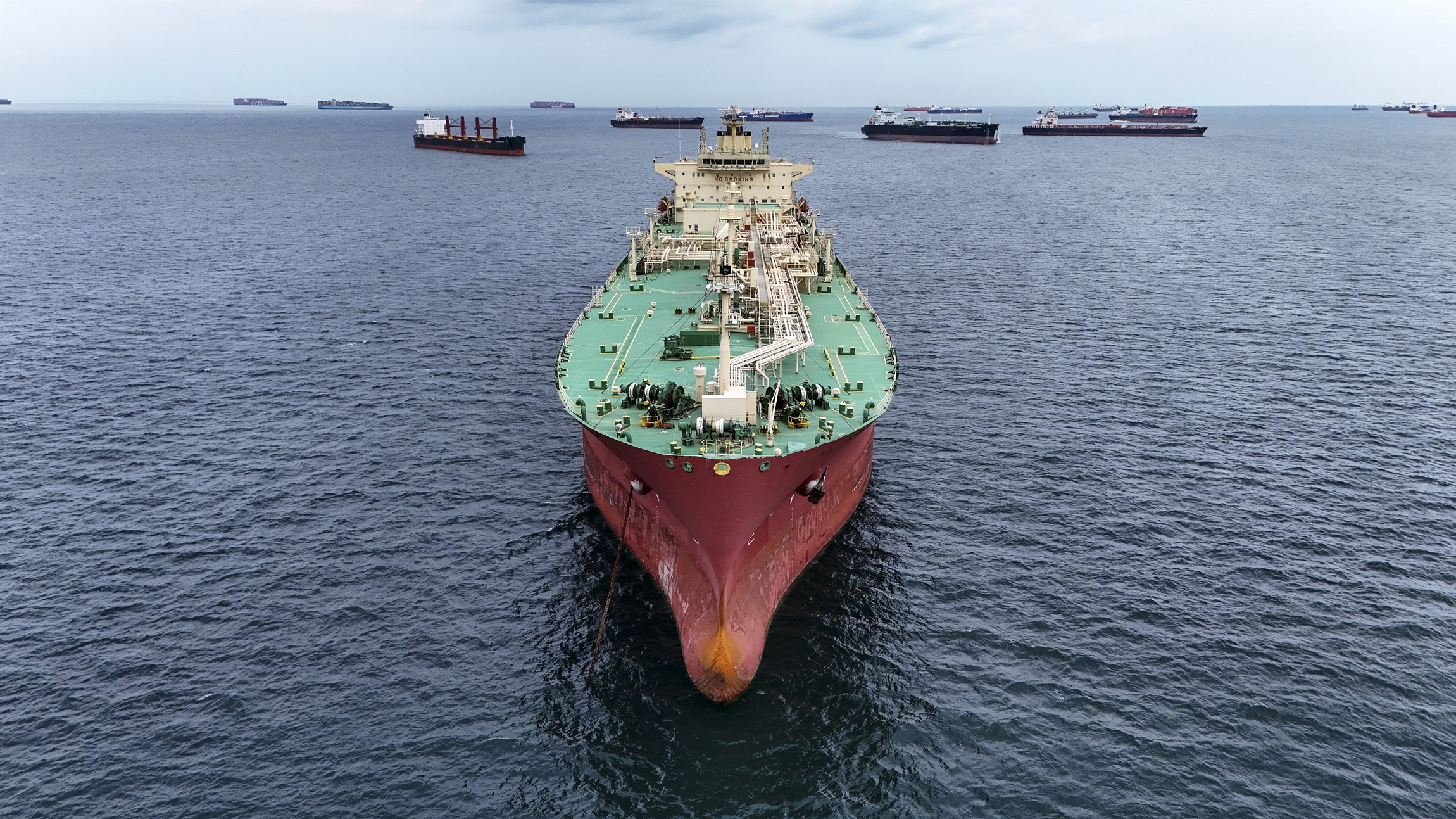
Honest, paywall-free news is rare. Please support our boldly independent journalism with a donation of any size.
Read more Trump Administration Secretly Working to Divert Billions From NIH Budget to Fund Iran War
While much of the world is focused on the disruption of shipping traffic near Iran and the Strait of Hormuz, another critical waterway is set to see its flow of ships sharply reduced in the coming weeks: the Panama Canal.
The reason? The El Niño weather phenomenon is creating drought conditions in the region.
El Niño is a regular weather pattern that happens every two to seven years. But the effects of the climate crisis are likely making this year’s El Niño more intense than usual.
According to a new study published in Science, El Niños are 36 percent stronger than they were before the industrial age. That includes a 16 percent jump in intensity over just the past 40 years.
In preparation for intensifying drought conditions, the Panama Canal is reducing the number of ships that can pass through. While ordinarily 40 ships enter and exit the canal daily, that number will be lessened to 34 per day for the first half of September. Starting mid-month, that number will go down to just 32 ships per day, a 20 percent reduction.
Read more Hegseth Extends Deployment of 50,000 Troops in the Middle East Through 2027
The Panama Canal works through a series of locks, which raise water levels from one side to the other as ships pass through. Although connecting two oceans, the locks are fed by nearby Gatún Lake and another artificial reservoir.
Those lakes, however, also provide drinking water and hydroelectric power for people living nearby.
“When water levels get too low in those reservoirs, they have to restrict the number of ships that go through because they want to conserve water for those other uses that are also critical,” said Samuel Muñoz, an associate professor at Northeastern University, speaking to Inside Climate News about the matter.
Traffic through the canal represents about 5 percent of the world’s global trade, including 40 percent of all container traffic for the U.S. The reduction in daily shipping traffic will undoubtedly impact prices on many goods, particularly in the U.S., at a time when prices are already increasing due to the Trump administration’s economic policies and decision to launch a war against Iran.
While the effects of the climate crisis are likely to blame for this year’s El Niño bringing worse drought conditions to the Panama Canal, the Trump administration continues to disregard human-made climate change as a legitimate existential threat, firing climate scientists within the National Oceanic and Atmospheric Administration (NOAA) and even removing language from government websites that once recognized the crisis as real.
Read more Trump Worries GOP Insiders as They Await Help From His Super PAC for Midterms