 By admin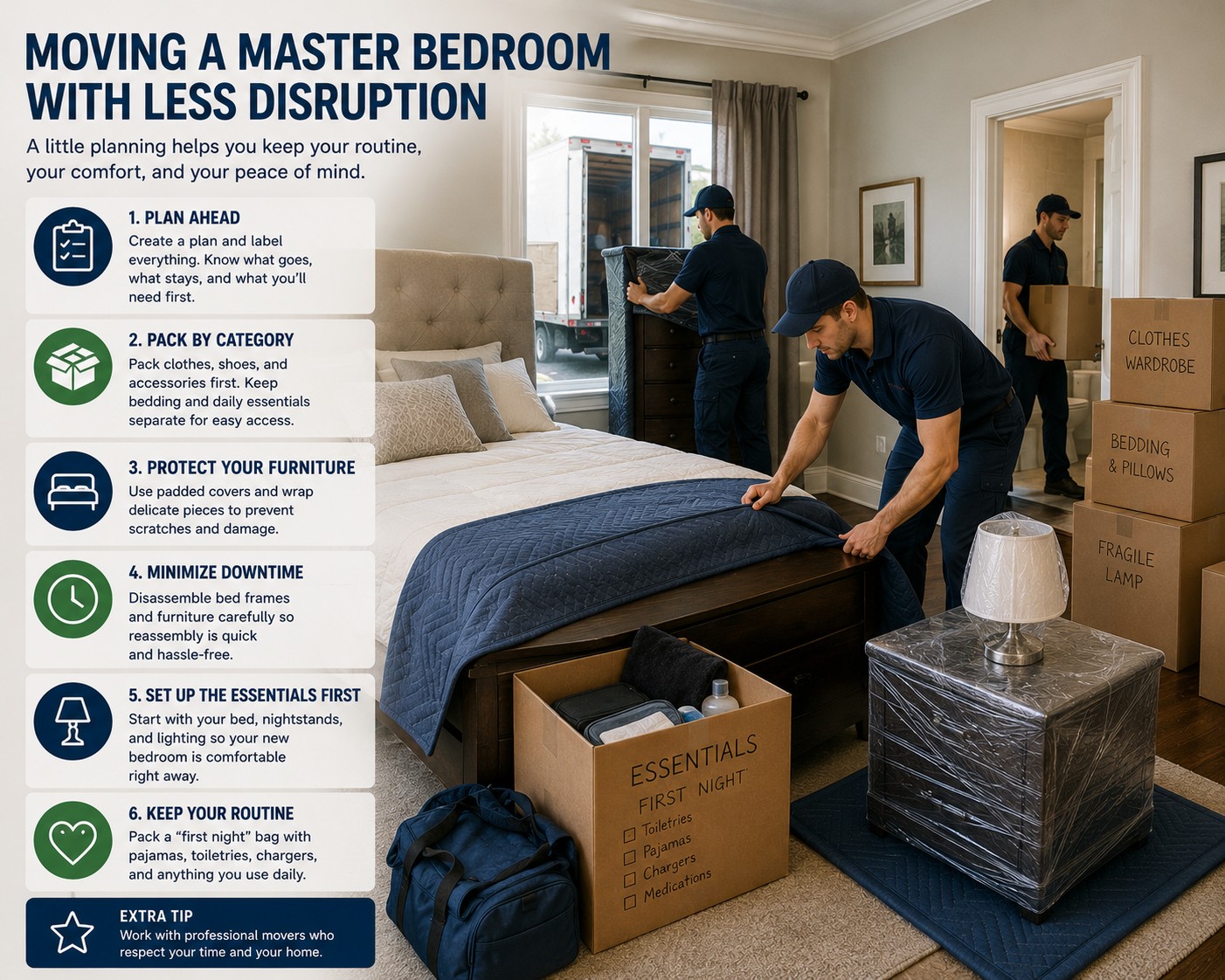
The master bedroom is one of the last rooms many homeowners want to disrupt during a relocation. It is where the day begins and ends, and keeping it reasonably functional can make the entire moving process feel more manageable. The challenge is that this room often combines bulky furniture, a large wardrobe, personal belongings, and delicate accessories in one space.
A carefully timed residential moving plan can keep most of the bedroom usable until the final stage. Nevada Movers helps Las Vegas households with household relocations, and homeowners can find more information about the company at https://nevadamoverslv.com/ before organizing their moving schedule.
Decide What Can Leave Early
The easiest way to reduce disruption is to avoid packing everything at once. Start with possessions that will not be needed during the final days at the current home.
Seasonal clothing, decorative pillows, spare blankets, rarely worn shoes, books, and accessories can usually be packed well in advance. This gradually reduces the contents of the bedroom while leaving essential items available.
Create a Temporary Wardrobe
Keep a small selection of everyday clothing outside the moving boxes. A suitcase or garment bag can hold several outfits, sleepwear, shoes, and other necessities.
This approach prevents unnecessary box opening and keeps the remaining wardrobe easier to manage.
Prepare Large Furniture Separately
Master bedrooms frequently contain heavy items that require more planning than ordinary cartons. Beds, wardrobes, dressers, nightstands, and large mirrors should each be assessed before moving day.
Measure the furniture and compare those dimensions with doorways, hallways, staircases, and other parts of the exit route.
If a bed frame or dresser can be safely disassembled, remove appropriate components and place the hardware in clearly marked bags. Take photographs of complicated connections before disassembly so reassembly is less confusing later.
Keep the Bed Until the Right Moment
There is little reason to dismantle the bed several days before the move. Unless the schedule requires otherwise, keep it available until the final stages.
Pack spare bedding first while leaving one practical set for everyday use. On the final night, place sheets, blankets, and pillows into a clearly marked bag that will remain easy to access.
The mattress should be protected against dirt, moisture, and contact with rough surfaces during transportation.
Empty Bedroom Storage Completely
Dresser drawers, wardrobes, cabinets, and nightstands should be emptied before furniture is carried.
Rather than combining everything into generic “bedroom” cartons, keep belongings grouped according to their original location. Labels such as “dresser accessories” or “nightstand items” provide useful guidance when unpacking.
This also makes it easier to find a specific personal item without opening every box in the new bedroom.
Protect Personal and Fragile Belongings

Master bedrooms often contain jewelry, watches, photographs, artwork, mirrors, lamps, and other items that deserve additional attention.
Small valuables and important personal documents should remain with the homeowner whenever practical. Fragile decorations should be wrapped separately and kept away from heavy objects.
Large mirrors and framed pieces need protection around their edges and surfaces. Preparing them before the moving crew arrives prevents fragile items from becoming obstacles during furniture handling.
Clear the Route Before Moving Day
Once the bedroom is packed, the remaining space should provide a clear path for carrying furniture.
Remove small tables, floor lamps, baskets, rugs, and other objects that could interfere with the route. Keep boxes away from doorways and avoid stacking belongings where movers need to turn large pieces.
If the route includes stairs or tight corners, point out those areas before work begins.
Use Professional Help for the Heavy Stage
The most physically demanding part of a bedroom move is often moving the furniture rather than packing the clothes and accessories. Large wardrobes and solid dressers can be difficult to maneuver, particularly through narrow residential spaces.
Nevada Movers provides residential moving assistance for households that want professional help with furniture and other household belongings. Details about the service are available at https://nevadamoverslv.com/services/residential-moving/.
With the heavy work handled by an experienced crew, homeowners can concentrate on final packing, personal belongings, and coordinating the rest of the household.
Set Up the Bedroom First at the New Home
The master bedroom does not necessarily need to be the first room completely unpacked, but getting the bed positioned can make the first evening much more comfortable.
Before unloading begins, decide where the bed and major storage furniture should stand. Clear the destination area and keep the bedding accessible.
Once the bed is assembled, unpack only the clothing and personal items needed immediately. The rest of the room can be organized gradually.
A master bedroom move becomes far less disruptive when it is treated as a sequence rather than a single packing event. By removing nonessential belongings early, keeping daily necessities available, preparing furniture carefully, and reserving the final dismantling work for moving day, homeowners can preserve a sense of normality while the rest of the Las Vegas home changes around them.