 By admin
Did you know that Truthout is a nonprofit and independently funded by readers like you? If you value what we do, please support our work with a donation.
Read more The Destruction of the Amazon Is Central to the Bolsonaros’ Vision for Brazil
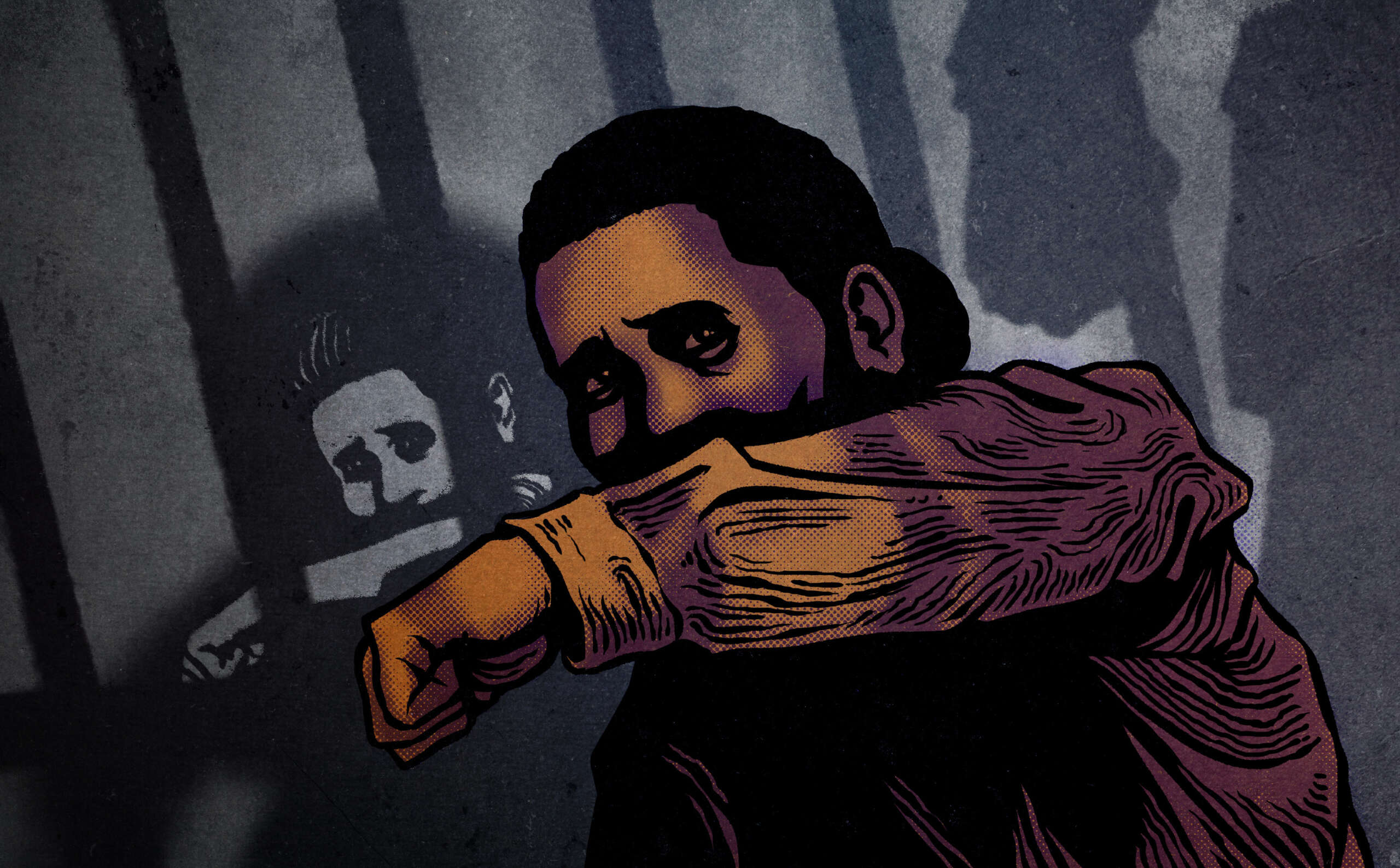
The man in blue is yelling at me.
His voice slices the air before my mind can catch up. My body responds first — heart racing, shoulders tightening, breath shallow. I know this reaction intimately. It is older than this moment, older than this uniform. It lives in muscle memory, in skin, in a nervous system trained early to survive authority.
The man in blue is screaming commands, provoking my trauma and post-traumatic stress disorder, though he will never call it that. To him, this is procedure. Policy. Control. To my body, it is a return.
The man in blue is searching me.
His hands do not ask permission. They do not pause when my breath stutters or my knees lock. They move with confidence, backed by the state. I am reminded how I was touched as a child — how adults with power handled my body as if it belonged to them, as if consent were irrelevant. I am reminded how silence was demanded then, too.
The man in blue tells me when to bail, when to move, when to stop, when to stand still. His instructions echo older ones — less formal, more intimate, equally violating. I remember being taught how to perform, how to comply, how to disconnect from myself in order to endure.
The man in blue wakes me up by kicking my bed.
My body jerks awake before my mind does, flooded with fear. This is not the first time I have been startled out of sleep by a man who wanted control. As a child, nights were never safe. In prison, neither are mornings. There is no sanctuary here — only submission or punishment.
The man in blue is watching me.
Watching as I walk. Watching as I eat. Watching as I exist. Surveillance is constant, normalized, justified. When I was a child, being watched meant danger. In prison, it is framed as safety. My body does not know the difference.
The man in blue roughs me up and cuffs me while I am already down. My sobbing is muffled, ignored, treated as inconvenience. I am told to obey. I am told this is for my own good. I am told this is how order is maintained.
I have heard all of this before.
Prison does not create trauma in a vacuum. It activates it. For survivors of childhood abuse — especially sexual abuse — incarceration is not merely confinement. It is reenactment. Strip searches, body checks, constant surveillance, verbal degradation, forced compliance: These are not neutral practices. They mirror the dynamics of abuse with chilling precision.
The uniform changes, but the power imbalance does not.
In prison, authority is embodied. It has a voice, a posture, a right to touch, restrain, and command. The system does not ask what a body remembers. It does not care how trauma lives in the nervous system. It demands obedience anyway.
I was abused by men who were supposed to protect me — family members, trusted figures, authority disguised as care. They told me I was safe while they harmed me. They told me to be quiet. They told me to obey.
Later, the state told me the same things. The man in blue said he would protect me.
Read more New Study Finds EPA May Be Vastly Underreporting PFAS Levels in Drinking Water
Like my father did.
Like my uncles did.
The lie landed the same way every time.
Incarceration relies on compliance. Compliance relies on fear. For trauma survivors, fear is already wired deep. Prison does not rehabilitate us — it exploits what was broken long before we arrived. Women and gender-nonconforming people are especially vulnerable. Many enter prison with extensive histories of physical and sexual violence. Yet carceral systems are not trauma-informed by design. They are trauma-producing.
We are told that strip searches are about contraband. That restraints are about safety. That surveillance is about order. But when a system repeatedly violates bodies with known histories of abuse, intent becomes irrelevant. Impact is what matters.
And the impact is devastating. Nightmares intensify. Dissociation becomes survival. Panic attacks are disciplined as defiance. Emotional responses are written up as infractions. Survival instincts are punished.
This is not a failure of individual officers. It is a feature of the system.
The brutality and inhumanity of incarceration is not an abstract policy issue. It is a lived reality — one that seeps into the body, the psyche, the soul. And prisons are especially cruel to those who are already carrying wounds. The carceral state does not heal trauma. It weaponizes it.
For a long time, I believed the man in blue. I believed I was the problem. That my reactions were flaws. That my fear was weakness. That my pain was noncompliance.
It took writing to break that spell.
Naming the man in blue — seeing him not as protector but as continuation — was an act of resistance. Writing allowed me to separate my truth from the narrative imposed on me. It allowed me to say: This is not safety. This is control.
On paper, I could tell the truth my body already knew.
That truth is dangerous to the prison system. Because once survivors recognize the pattern, compliance fractures. Silence breaks. The uniform loses its invisibility.
That is why incarcerated voices matter. Not as confessions. Not as cautionary tales. But as testimony.
People who have been inside understand something the outside world often refuses to see: incarceration is not just about punishment. It is about power over bodies — especially bodies that have already been violated.
When the man in blue told me I was free, my demons and trauma still festered inside me. Freedom did not come from release papers or commands barked through steel doors. It came from reclaiming my voice. From telling the truth even when my hands shook.
I am not free because the state says I am.
I am free because I named the lie.
Prisons will continue to retraumatize survivors as long as society accepts control as care and punishment as protection. Writing like this exists to interrupt that acceptance.
Read more Ballot Measures Will Impact LGBTQ+ Rights in 7 States This Election
I write so the world can no longer say it didn’t know.
The man in blue does not get the last word.
I do.