 By admin
Did you know that Truthout is a nonprofit and independently funded by readers like you? If you value what we do, please support our work with a donation.
Read more Todd Blanche Won’t Rule Out DOJ Disruption of Midterm Elections Certification
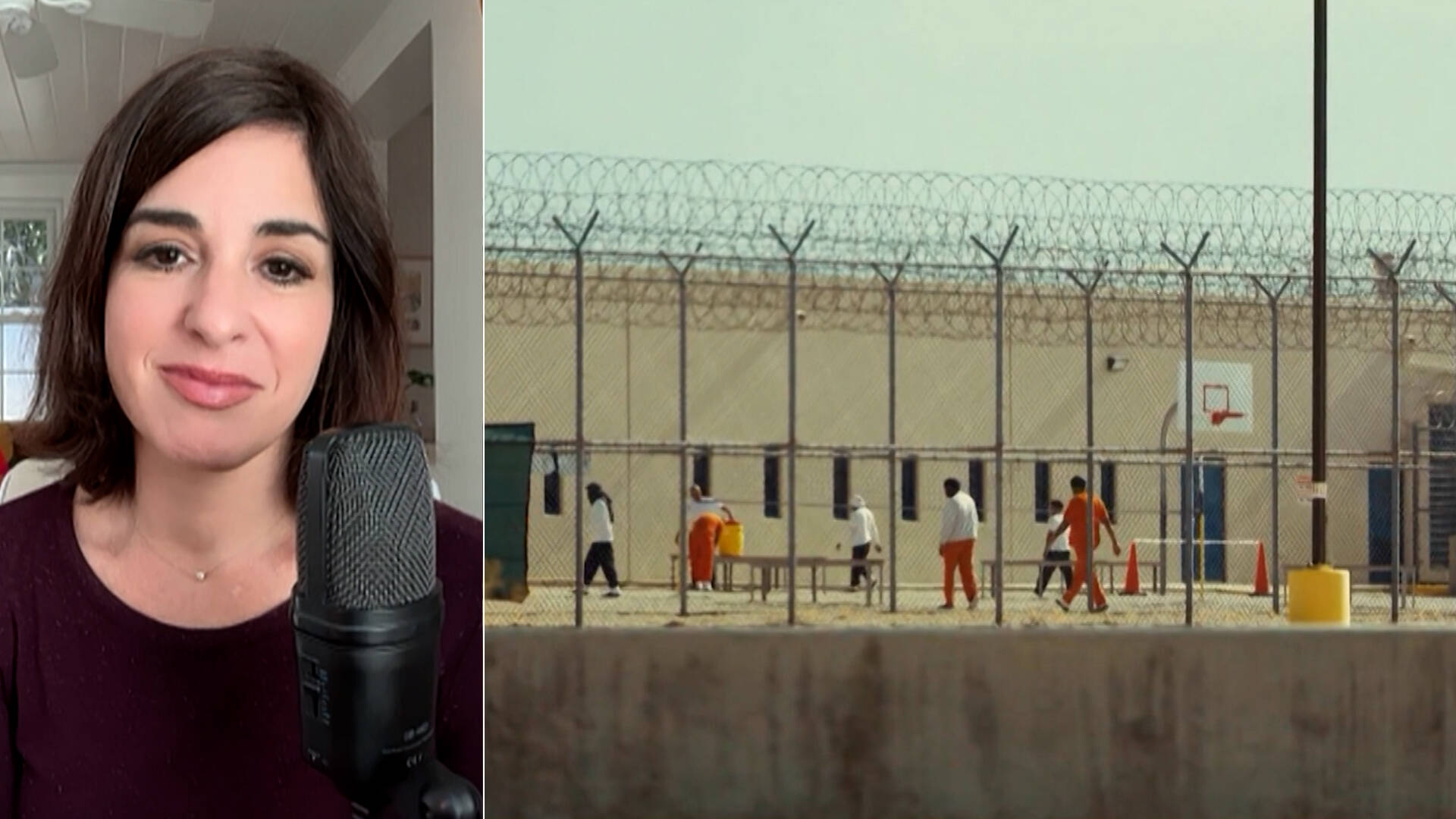
At least 59 people have died in ICE custody since the start of President Donald Trump’s second term, the highest number in more than a decade. Many deaths have been linked to medical neglect, including four of five recent deaths at California’s Adelanto Processing Center, according to a 2026 report by the state attorney general. Al Jazeera English’s Fault Lines investigated deaths at the facility, which is operated by the private prison company GEO Group, in the new documentary Dying in Detention.
“GEO Group has made over a billion dollars in profits from immigration detention. They have given more than a million dollars … to help reelect Donald Trump,” says correspondent Natasha Del Toro. “That raises a lot of questions for us about the relationship between GEO and the federal government, and some of these conflicts of interest.”
TRANSCRIPT
This is a rush transcript. Copy may not be in its final form.
AMY GOODMAN: This is Democracy Now!, democracynow.org. I’m Amy Goodman in Los Angeles. Juan González is in Chicago.
We’re turning now to the rising numbers of deaths in ICE custody. At least 59 people have died in immigration detention since the start of Trump’s second term, the highest in more than a decade, and a growing number of people are dying from medical neglect. Emiliano Andrade-Covarrubias, a 56-year-old legal permanent resident who died earlier this month at an ICE detention center run by the private GEO Group in Laredo, Texas, has complained to his daughter for months about the lack of medical care in detention. At the Adelanto Processing Center, just north of where I am right now in Los Angeles, four out of five recent deaths were linked to substandard medical care. That’s according to the California attorney general’s report on ICE detention centers in California this year.
Journalist Natasha Del Toro and Al Jazeera’s Fault Lines investigated the deaths at the Adelanto Processing Center, which is run, yes, again, by the private GEO Group. This is a clip from the Fault Lines episode Dying in Detention.
JESUS ORTIZ RUIZ: You gotta be literally dying here for you to get sent to the hospital.
NATASHA DEL TORO: We’re traveling to one of the deadliest immigration detention facilities in the United States. The Adelanto ICE Processing Center sits on the edge of the High Desert in California.
JESUS ORTIZ RUIZ: There’s four people in the cell with us. We’re at max capacity right now.
NATASHA DEL TORO: We’ve been speaking with people detained there, people who made it out.
[translated] What are the conditions like inside?
MELVIN: [translated] Not very good.
MELVIN’S DAUGHTER: I’ve never seen him like this.
NATASHA DEL TORO: Is it shocking to see him?
MELVIN’S DAUGHTER: He looks older.
NATASHA DEL TORO: He looks older.
And hearing from family members whose loved one went in and didn’t come out alive.
JOSE MIGUEL AYALA: I feel like they’re just treating these people like animals, in a way. None of these deaths should have happened.
NATASHA DEL TORO: As the Trump administration continues to detain record numbers of immigrants, more and more are dying behind bars.
DR. NICHOLAS CUNEO: The number of deaths has more than tripled. The risk of death in ICE detention has never been higher.
NATASHA DEL TORO: Adelanto is run by the for-profit prison company The Geo Group. Four immigrants died there in a recent six-month span. Detainees have fought for better conditions, filing a lawsuit and going on a hunger strike.
JULIUS FREDERICK: They retaliate against you. They just come in, they grab you, and they take you to solitary confinement.
ASHRAF ABUJUMA: They beat me up. I don’t know if you can see, like, bruises all over my body.
AMY GOODMAN: One of the people who died recently at the Adelanto ICE jail in California was Ismael Ayala-Uribe. This is another clip from the documentary Dying in Detention.
NATASHA DEL TORO: Ismael Ayala-Uribe died after becoming sick in an immigration detention center in California in September 2025. He was 39 years old. He was one of more than 50 people to die in the custody of Immigration and Customs Enforcement, or ICE, during President Trump’s first 500 days back in office.
JOSE MIGUEL AYALA: He was very protective of, like, not just us, but my mom and dad, too.
Read more Hegseth Makes Unannounced Visit to Netanyahu Ahead of Israel’s Elections
NATASHA DEL TORO: Ismael was born in Mexico and came to the United States undocumented when he was 5. He grew up in Southern California and was later granted DACA, a program that gives some immigrants who came here as children temporary protection from deportation.
Was he a good uncle?
JOSE MIGUEL AYALA: He was a good uncle. He was — the kids needed something, he would always go get it, get them school clothes, supplies or whatever they needed, you know? And they do miss him.
NATASHA DEL TORO: He worked at this local car wash just outside Los Angeles for 15 years, supporting his family and eventually becoming the owner’s right-hand man. In 2015, he was convicted of driving under the influence and lost his DACA protections. That left him vulnerable to deportation when President Trump returned to the White House and ramped up immigration raids across the country.
AMY GOODMAN: For more, we’re joined now from Tampa, Florida, by the journalist Natasha Del Toro, investigative correspondent of Fault Lines from Al Jazeera English, the most recent documentary, Dying in Detention.
Watching this documentary, your heart breaks, Natasha. This story of Ismael, 39 years old, dies of an abscess in the year 2026 because an infection that was left to fester goes into his bloodstream. Tell us more about this story.
NATASHA DEL TORO: Yeah, Amy, thank you so much for giving space to this story. It’s so important, and it’s happening right here in our country.
So, as you all noted, Ismael Ayala-Uribe was 39. He came to this country when he was 4 or 5 years old. His parents brought him from Mexico. And he had DACA protections, which he lost because of a DUI. He had lost — he had worked at this car wash for 15 years, was the right-hand man to the owner, and then was picked up in these ICE raids that happened last summer, where they picked up hundreds of workers, people at their place of work, but they figured that — you know, ICE figured that they would be able to get a lot of undocumented people there. And that’s where they picked up Ismael, took him down to Adelanto.
Ismael had gotten sick pretty quickly while he was there. He started complaining of fever. He had chills, started getting very pale. And he was complaining of a sore that was, he said, 10 out of 10 pain. But initially he was ignored when he asked for medical help. Finally, it got so bad that they had to rush him to the infirmary, ended up giving him a Tylenol, which is what we heard over and over again, that they — no matter what they were complaining of, they would get a Tylenol. And they didn’t actually catch the source of the problem, because no one did an examination of the place where he was feeling pain, which was this infected abscess, which, like you said, in 2026, this is really an easy thing to catch. All you need is, you need an antibiotic, is really what you need. But because no one did an examination, no one gave him an antibiotic. He developed sepsis and went into sepsis shock, and ultimately had to go to the emergency room. Finally, they took him to the emergency room. But it’s there that that he died. And we spoke with a physician for human rights who examined — who looked through his medical reports and told us that this was a very preventable death.
Sadly, what we found is that what happened to Ismael is not an isolated incident. This is actually part of a much larger pattern.
JUAN GONZÁLEZ: And I wanted to ask you, Natasha — he died at 2:30 in the morning, and his family was not notified by ICE. It was the local police that notified them. What is the — how are family able to communicate with those of their family members who are detained in these centers?
NATASHA DEL TORO: Sure. They are able to go to the center. And Lucia, Ismael’s mom, who we spoke to, said she had gone there. Mind you, this is two hours away from Los Angeles. They live in Orange County. And they were driving there as often as they could. So, they were able to communicate with their loved ones by visiting the center. But as you noted, they were not — they were not notified of the death until the next morning, when Lucia and Jose, the brother, got a knock at the door and said that Ismael was dead, that he had passed.
JUAN GONZÁLEZ: Could I ask you also — the GEO Group announced recently that the Department of Homeland Security had purchased two immigration detention centers in Adelanto for $950 million. What’s the significance of this, of a center going from private ownership to government ownership?
NATASHA DEL TORO: Sure. And this was a very recent announcement that was made. We had actually wrapped up our reporting when we found out that the government had actually purchased the GEO Group. We are not entirely sure why they decided to purchase Adelanto, but what I can tell you is that there are several class-action — there are lawsuits against the Adelanto facility because of the conditions inside. Many of the detainees filed lawsuits. And what we believe is that it becomes harder to sue if it’s in government hands versus if it’s owned by — you know, in private hands. What we do know, though, is that Adelanto is also — it’s going to continue to be run by the GEO Group. So, even though the U.S. government has bought the facility, it’s still going to be operated by GEO.
We also found in our investigation that there were a lot of ties, a lot of conflicts of interest between the federal government and the GEO Group. For example, the director of ICE is somebody who was an executive, a high-level executive, at the GEO Group, somebody named David Venturella. Also, Jim Jordan, who we confront in the film, who is the — you know, he’s the chairman of the House Judiciary Committee. It was leaked that he received, or a PAC tied to him received, a $250,000 contribution from the GEO Group. As a chairman of the House Judiciary Committee, he is supposed to provide oversight of these immigration detention centers, and yet groups tied to him are receiving substantial donations from the GEO Group.
And then, finally, you know, GEO Group has made over a billion dollars in profits from immigration detention. They have given more than a million dollars in campaign — like, to help reelect Donald Trump. So, part of his campaign donations, he received more than a million dollars. So, obviously, that raises a lot of questions for us about these — the relationship between GEO and the federal government and some of these conflicts of interest.
AMY GOODMAN: We just have 30 seconds, Natasha, but I want to ask: Is it possible the number of people who’ve died after medical care failings could be higher, given the rapid deletion of documents by the Trump administration?
NATASHA DEL TORO: Oh, yeah. I mean, we’ve had a hard time giving concrete numbers, mostly because, first, they keep increasing. I mean, someone died just the weekend, a few days ago, in Texas. But also, they recently changed their reporting requirements. So, now ICE does not have to report deaths for anybody held in custody up to 30 days after. They do not have to report those deaths. So, it’s entirely possible that there have been more, that the numbers are not current and they’re not accurate, because they are cutting the requirements, the reporting requirements. Also —
AMY GOODMAN: Natasha Del Toro —
NATASHA DEL TORO: — one more thing I want to mention —
AMY GOODMAN: — I want to thank you so much for being with us, and we’re going to link to your documentary, called Dying in Detention.
That does it for our show. Tonight at 6:30, I’ll be at Stanford University at the CEMEX Auditorium for the screening of Steal This Story,” Please!, in conjunction with the U.N. Association Film Festival. On Saturday, 6:30 at the New People Cinema in Japantown, San Francisco. Sunday at Smith Rafael Center in San Rafael. Monday and Tuesday in Boulder, Colorado, and Fort Collins. I’m Amy Goodman, with Juan González.
Read more Netanyahu Orders “Full Lockdown” of Occupied West Bank